









How children fend off colds in the first three years of life, Research finds out

Researchers from Ben-Gurion University of the Negev and Columbia University identify potential mechanism which help children recover from colds

ednetwork
ednetwork Chief Editor
Aug 10, 2023 • 8:30 PM  314
P
Press Release
NEWS CARD
Logo
How children fend off colds in the first three years of life, Research finds out
“How children fend off colds in the first three years of life, Research finds out”

Favicon
Read more on educationdaddy.in
10 Aug 2023
https://www.educationdaddy.in/news/press-release/how-children-fend-off-colds-in-the-first-three-years-of-life-research-finds-out
Copied
How children fend off colds in the first three years of life, Research finds out

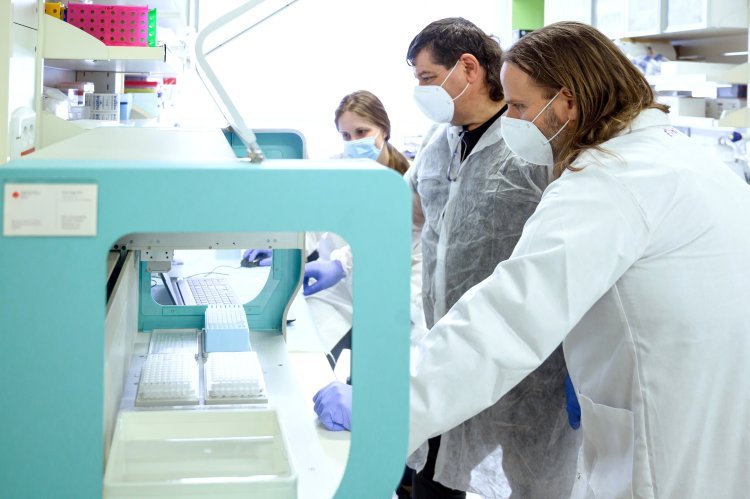
August 10, 2023: Anyone who has had children remembers how many colds they got during their first three years of life. Whether novel respiratory viruses like SARS-CoV-2 or routine respiratory viruses, they lack repeated exposures that provide long-term immune protection. Nevertheless, they manage to recover remarkably well. How they do so has remained elusive, however.

Now, a team of scientists led by Columbia University in collaboration with Ben-Gurion University of the Negev and others, has identified what they believe could be the mechanism by which children recover from colds.

Their findings were published recently in the prestigious journal Nature Immunology.

The scientists, led by Prof. Donna L. Farber from Columbia University and Prof. Tomer Hertz from Ben-Gurion University, were given novel access to 63 pediatric organ donors, aged 0-13: 60 donors who died of non-infectious causes and 3 donors who died with ongoing symptomatic respiratory infection representing a racially and ethnically diverse population. The scientists then investigated immune cells in the lungs and lung-associated lymph nodes.

They identified bronchus-associated lymphoid tissue (BALT) - a novel immunological site, which develops during infancy and can be found around airways during childhood. While this has been previously demonstrated in mice, this study was the first to show that BALT exists in humans. The study found that BALT starts to decline around age 4 or 5 and are replaced by memory T cells. The BALT structures promote germinal center formation, B cell differentiation, class switching, and somatic hypermutation, which, in turn, promotes immune protection.

The Hertz lab used a novel antibody profiling assay to reveal distinct specificity profiles for antibodies produced in the lung and BALT compared to those in plasma of young children (1-3yrs). BALTs were enriched with antibodies against common respiratory viruses, while serum antibodies primarily targeted childhood vaccines and herpes viruses. These results suggest that BALT antibodies were secreted by local plasma cells in the lung and lung lymph nodes, independently of serum antibodies.

"There are major implications for promoting respiratory immunity through vaccines. The presence of BALT in young children suggests that intranasal administration of vaccines may be particularly effective in children when priming outside lymphoid organs can occur. Moreover, induction of BALT could also be targeted in adults. Certain experimental vaccines were shown to induce BALT in adult mice and correlated with robust protection against bacterial and viral respiratory pathogens and could be targeted in future vaccines where systemic administration does not prevent infection or illness," the researchers wrote.

Additional researchers include: Rei Matsumoto, Joshua Gray, Ksenia Rybkina, Rebecca S. Guyer, David Chen, Thomas J. Connors, and Peter A. Sims of Columbia University, Hanna Oppenheimer, Lior Levy, and Lilach M. Friedman of Ben-Gurion University, Muhammad Khamaisi and Uri Hershberg of the University of Haifa, Wenzhao Meng, Aaron M. Rosenfeld, Marissa Bradley and Eline T. Luning Prak of the University of Pennsylvania,  and Mark A. Atkinson, Todd M. Brusko,  and Maigan Brusko of the University of Florida.

The research was supported by NIH grants AI100119, AI106697, AI128949, NIH/NCI Cancer Center Support Grant P30CA013696, and grants from the Helmsley Charitable Trust.

favorite Follow us for the latest updates:

ednetwork Chief Editor

Digital Archives

home Home amp_stories Web Stories local_fire_department Trending play_circle Videos mark_email_unread Newsletter